
Marine epoxy: how to choose WEST SYSTEM resin, hardener and pumps
A practical guide to the 105 System for boat owners and marine professionals: bonding, fiberglass, fairing, clear finishes and working in warm weather.
Choosing marine epoxy involves more than picking a resin. The job, surface preparation, temperature, working time and finish all influence the result. In the WEST SYSTEM 105 System, the resin provides the base, the selected hardener controls important handling characteristics, and an appropriate filler can adapt the mixture for bonding or fairing.
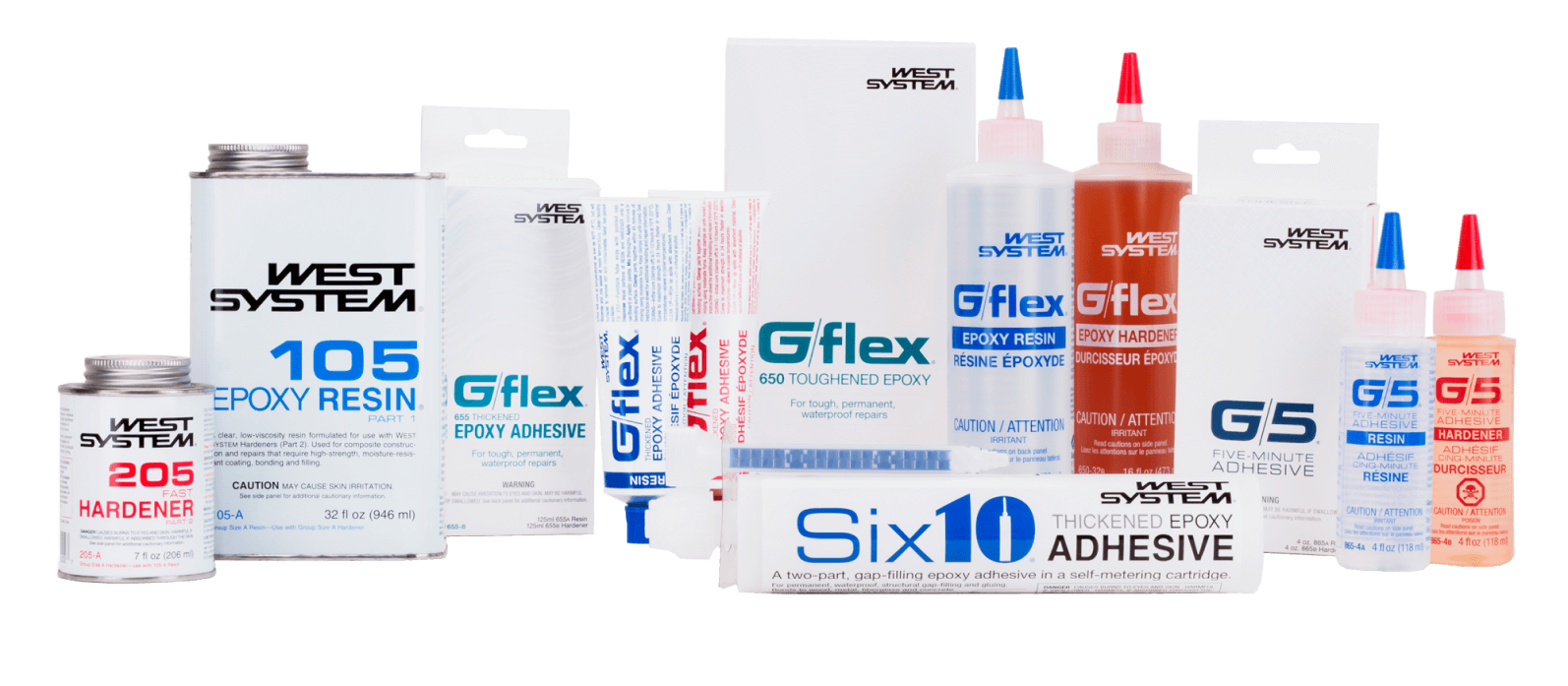
What does WEST SYSTEM 105 do?
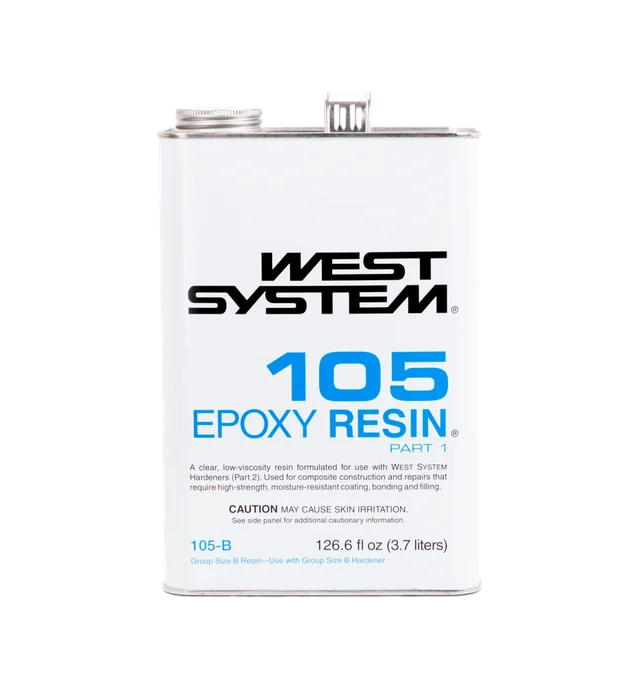
105 Epoxy Resin must be mixed with a compatible WEST SYSTEM hardener. It is not a ready-to-use adhesive. Depending on the combination and the repair method, the mixed system can wet out fiberglass, bond prepared materials, coat wood or form the base of a filled mixture.
For example, laminating fiberglass requires the resin/hardener mixture to saturate the reinforcement. Filling and smoothing an uneven surface may instead require a fairing filler. Those are different jobs: a smooth cosmetic repair does not establish that a damaged laminate has regained its strength.
Material compatibility matters too. Metals, oily woods and plastics can require specific preparation or another adhesive system. For structural damage, wet or rotten core material, or an unknown substrate, establish the repair method before ordering products.
Start with the job you want to do
Use this quick selector to find a starting point, then read the hardener and preparation sections below. It does not specify laminate thickness, structural strength or when a repaired boat can return to service.
205, 206, 207 or 209: which hardener?
Choose by temperature, available working time and finish. A faster hardener is not automatically a stronger choice. For a visible wood finish, clarity is an additional requirement; 207 Special Clear is the dedicated option in this comparison.
| Hardener | Typical selection reason | Resin : hardener, by volume | Minimum recommended temperature | Pot life: 100 g at 22°C / 72°F |
|---|---|---|---|---|
| 205 Fast | Shorter working time; cooler conditions | 5 : 1 | 4°C / 40°F | 9–12 minutes |
| 206 Slow | More time for general bonding and coating | 5 : 1 | 16°C / 60°F | 20–25 minutes |
| 207 Special Clear | Clear coating and fiberglass over natural wood | 3 : 1 | 16°C / 60°F | 22–26 minutes* |
| 209 Extra Slow | Extended working time; very warm conditions | 3 : 1 | 21°C / 70°F | 40–50 minutes |
205 Fast
- Typical selection reason
- Shorter working time; cooler conditions
- Resin : hardener, by volume
- 5 : 1
- Minimum recommended temperature
- 4°C / 40°F
- Pot life: 100 g at 22°C / 72°F
- 9–12 minutes
206 Slow
- Typical selection reason
- More time for general bonding and coating
- Resin : hardener, by volume
- 5 : 1
- Minimum recommended temperature
- 16°C / 60°F
- Pot life: 100 g at 22°C / 72°F
- 20–25 minutes
207 Special Clear
- Typical selection reason
- Clear coating and fiberglass over natural wood
- Resin : hardener, by volume
- 3 : 1
- Minimum recommended temperature
- 16°C / 60°F
- Pot life: 100 g at 22°C / 72°F
- 22–26 minutes*
209 Extra Slow
- Typical selection reason
- Extended working time; very warm conditions
- Resin : hardener, by volume
- 3 : 1
- Minimum recommended temperature
- 21°C / 70°F
- Pot life: 100 g at 22°C / 72°F
- 40–50 minutes
Values are from the linked US technical data sheets. *The 105/207 technical sheet gives 22–26 minutes; the 207 product page gives 20–26 minutes. These are laboratory reference figures, not guaranteed working times on your boat. Follow the instructions supplied with your exact product. Volume ratios must not be used as weighing ratios.
Pot life is not the same as time available on a surface. A 100 g sample held in a container builds heat differently from a thin film spread over a panel. Temperature, batch size and application thickness change the rate of cure.
Likewise, becoming solid is not the same as reaching working strength or full cure. Do not use the table to decide when to load a joint, sand without appropriate protection, apply another manufacturer's coating or launch the boat. Check the relevant curing and finishing instructions for the actual conditions.
Working with epoxy in Mérida and other warm climates
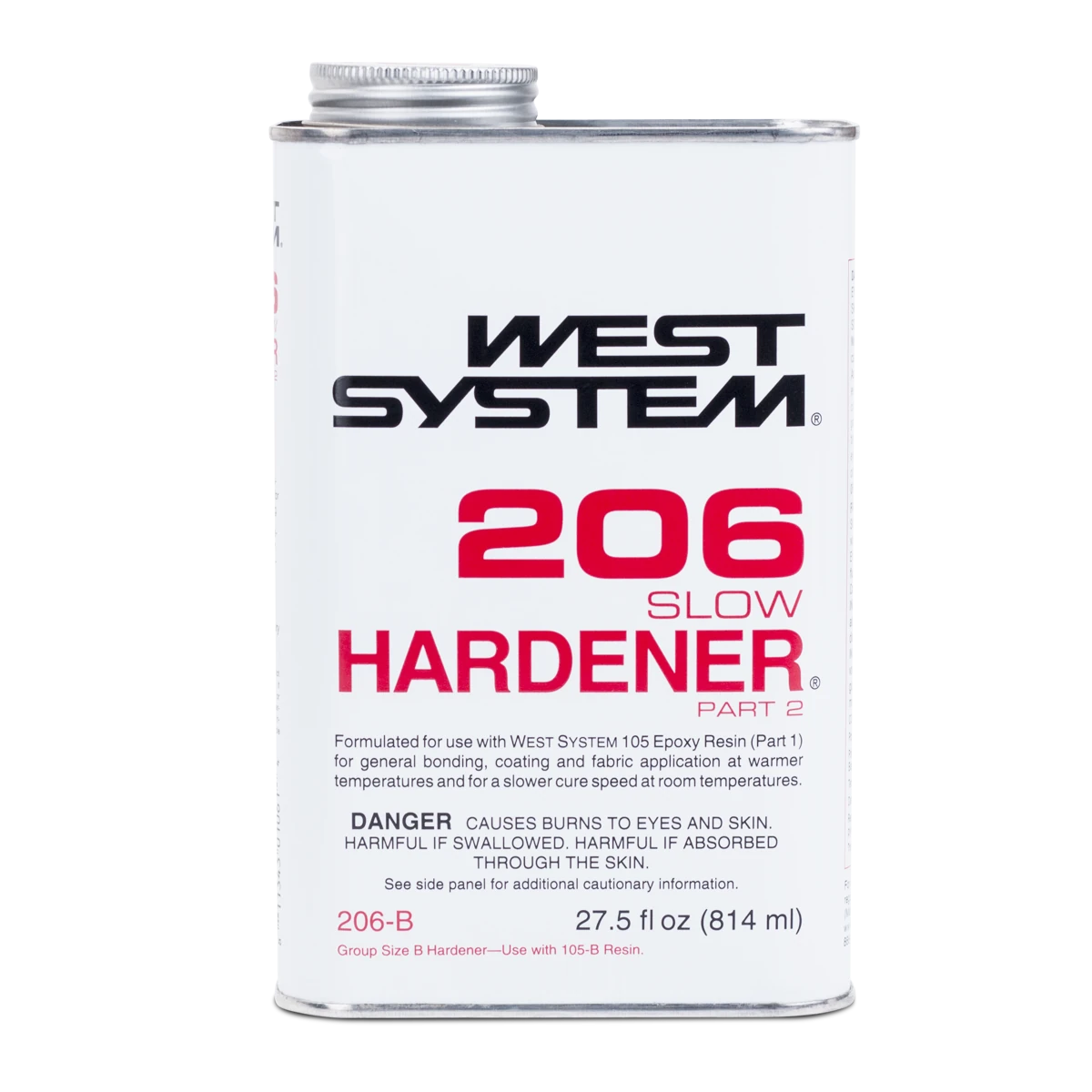
Plan around the temperature of the materials and the work area, not just a weather forecast. WEST SYSTEM identifies 206 Slow and 209 Extra Slow as options where more working time is needed. The minimum temperatures above still apply; choosing 209 solely because it is the slowest can be unsuitable in a cooler workspace.
Mix manageable batches and transfer mixed epoxy to a wide, shallow working container when appropriate. A large mass left in a mixing cup retains reaction heat and can cure rapidly. This exothermic reaction can become hot enough to damage containers or cause burns.
Never add extra hardener to accelerate curing or less hardener to slow it down. Keep the specified ratio. Do not treat this laminating and bonding system as an unrestricted deep-pour resin; a large void or thick casting needs a suitable procedure.
300 Mini Pumps: one full stroke of each
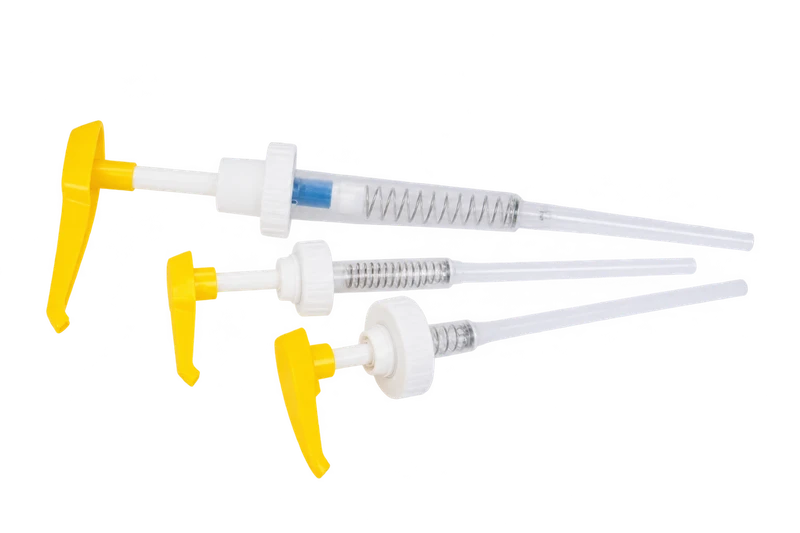
With correctly installed, primed and functioning 300 Mini Pumps, dispense one full stroke of resin for each full stroke of hardener. The pumps deliver different volumes to produce the required ratio. A 5:1 liquid ratio does not mean five resin strokes and one hardener stroke.
- Use the hardener pump marked 205/206 for those hardeners, or the one marked 207/209 for those hardeners.
- The set is intended for Group Size A, B and C containers. Fit the extension tubes specified for the container size; it is not a universal pump for every container.
- Prime the pumps according to their instructions. Fully depress each pump and let it return fully before the next stroke; partial strokes can give an incorrect ratio.
- Verify dispensing and make a small test batch before starting the repair, especially after storage. If dispensing is irregular or contains air, resolve it before mixing the project batch.
If measuring without these pumps, use the specified volume ratio accurately. If using a scale, obtain the weight ratio for the exact resin/hardener combination from its technical sheet; do not assume that a volume ratio is also the weight ratio. Read the 300 Mini Pump operating instructions.
Bonding filler and fairing filler have different jobs
Mix the resin and hardener thoroughly before adding filler. Filler changes handling and the properties of the filled mixture; it does not replace hardener or change the required resin-to-hardener ratio.
406 Colloidal Silica is a thickener used in adhesive mixtures and fillets where resistance to sagging is useful. Other adhesive fillers may suit a particular joint better. Selection depends on the material, joint and load, not simply the thickest possible consistency.
407 Low-Density is intended for fairing mixtures that are easier to shape and sand. Use it to smooth a properly repaired surface; do not substitute a cosmetic fairing mixture for a specified structural laminate or adhesive. WEST SYSTEM recommends sealing a faired surface with epoxy before the finishing system.
Prepare the surface, mix carefully and plan the finish
Clean, dry and prepare
Remove contamination before sanding so it is not spread into the surface. Remove loose or unsound coatings, and follow the substrate-specific preparation instructions. The surface must be dry; condensation can compromise preparation.
Measure, then mix
Use the correct proportions in a suitable clean container. WEST SYSTEM instructs mixing for at least one minute, longer in cooler conditions, while scraping the sides, bottom and corners. Add any selected filler only after the resin and hardener are mixed.
Check for amine blush
Some cured epoxy surfaces develop a waxy amine-blush film. WEST SYSTEM specifies clean water and an abrasive pad for removal, followed by drying and the required sanding. Solvent wiping is not the recommended way to remove this water-soluble film. 105/207 is formulated to be blush-free.
Protect exposed epoxy from sunlight
207 contains a UV inhibitor, but it still needs an appropriate UV-protective finish for sun exposure. Choose a compatible paint or UV-filtering clear finish and follow its manufacturer's preparation and curing requirements. Test compatibility when uncertain; do not assume every gelcoat, varnish or paint can go directly over any epoxy surface.
Protect yourself while working
Avoid skin and eye contact with uncured resin, hardener and mixed epoxy. Use protective gloves, eye protection and clothing suitable for the products, together with ventilation and sanding-dust control. Review the applicable safety data sheets for the work being done, especially in enclosed boat spaces.
Repeated exposure can cause sensitization. Do not clean epoxy from your skin with solvents, and do not assume that epoxy which feels hard has completed its cure. Read WEST SYSTEM's exposure-prevention guidance and safety data sheets.
Choosing WEST SYSTEM for a project in Mexico
PLC Marine Group can help you review the WEST SYSTEM range for your project. Share the substrate, type of repair, approximate area, working temperature, intended finish and any existing coating. Photographs can help explain the job, while structural repairs may require an in-person assessment.
Contact info@plcmarine.com or +52 56 5912 4231 to confirm the appropriate products, pack sizes and availability. Our logistics warehouse hub is in Mérida, Yucatán, serving enquiries from across Mexico.
Manufacturer references
Reviewed on November 8, 2026 using WEST SYSTEM / Gougeon Brothers documentation. The comparison identifies its test conditions and the published 207 timing difference. The instructions supplied with the product and the appropriate repair manual remain the reference for the work itself.